The Host Family in Giyur: Why One Shabbat with a Family Is Worth More Than Ten Classes
June 10, 2026 · The Derech Ruth team, guided by Rabbi Gadi Elbaz
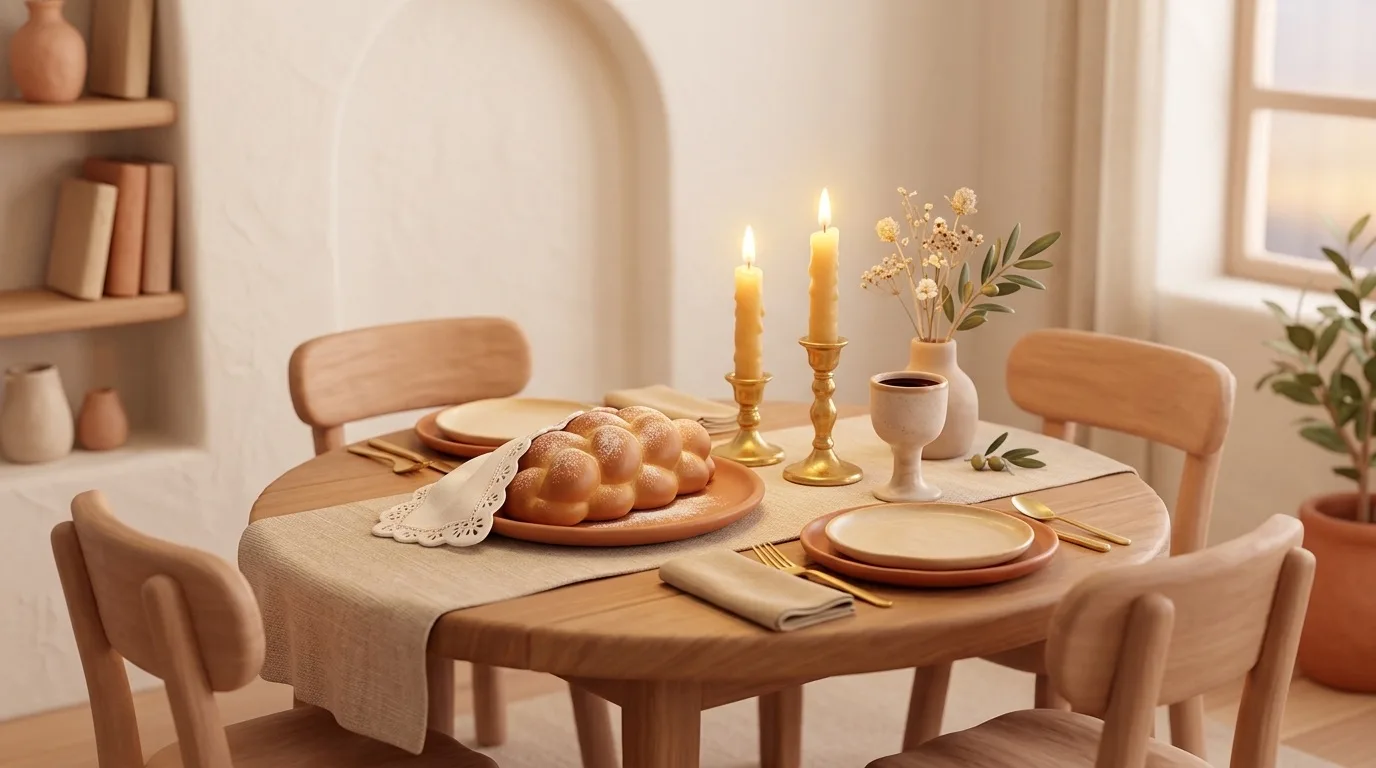
You can learn all the laws of Shabbat from a book - and still not know what Shabbat is. The melody of the Kiddush, the calm of the meal, the conversations that stretch into the night - those you only learn at a family's table.
What exactly is a host family?
An observant family that opens its home to a conversion candidate: hosting for Shabbatot and holidays, answering everyday questions, and above all - providing a living example of a Jewish home. It is not a formal commitment but a human bond, and it often continues for years after the giyur, like family in every sense.
Why does the Beit Din ask about it?
Because lived experience cannot be faked. A conversion candidate who talks about Shabbatot at the Cohen family's home, about Grandpa's special custom at the Seder, about the children singing zemirot - is speaking from life, not from a notebook. Dayanim spot the difference within minutes, and a letter from a host family is one of the strongest recommendations in your file.
How do you find the right family?
The match matters: a shared language (both literal and cultural), a reasonable walking distance, children of similar ages if relevant, and a community style that suits you. At Derech Ruth we match host families by location, language, and preferences - and we follow up to make sure the connection is actually happening and benefiting both sides.
And what do you give back?
Host families do this out of love, but the relationship should go both ways: arrive on time, bring something small for the table (kosher! with a recognized certification), offer to help, and be the kind of guest people enjoy hosting. Many conversion candidates gradually go from being guests to being part of the family - and that is exactly the goal.
Your first Shabbat with the family - what to expect
Arrive before Shabbat begins (important! showing up in a car after candle-lighting is awkward for everyone). Kabbalat Shabbat and prayers - the men usually go to the synagogue, the women light candles at home. Then: Kiddush, ritual hand-washing, challot, and a meal that lingers. Don't worry about mistakes - humming la-la-la when you don't know the words is completely acceptable. Ask questions at the table: host families love to share. And in the morning - synagogue, the second meal, and rest. Bring with you: something small and sweet (with recognized kosher certification), and comfortable socks. That's it. The heart does the rest.
The small courtesies that make a big difference
No photos and no touching your phone on Shabbat - not even "just for a second" on the balcony. Don't turn lights on or off (if you need something - ask how). Offer to help serve and clear. Ask before opening the fridge. If you bring food - only with a kosher certification the family trusts, and preferably coordinate in advance. And above all: be present. Families tell us that their most beloved guests are not the ones who knew the most halacha - but the ones who were truly there, in the conversation, in the singing, with the children.
And if the match doesn't work?
It happens, and that's okay. Sometimes the chemistry just isn't there, the distance is a burden, or the family's style simply doesn't suit you. Don't quietly disappear and don't keep coming for Shabbatot out of politeness - talk to us. Switching host families is routine and hurts no one when it is done with sensitivity. The goal is not to check a hosting box, but to find a true second home. In our system, matching is done by location, language, ages, and style - and we keep adjusting it until it's right.
This article is general information - not a halachic ruling or legal advice. For personal questions, your accompanying rabbi is the address.
״עמך עמי · ואלהיך אלהי״
Feel like this path is speaking to you?
A first meeting - no commitment, with a lot of heart.
Start the journey →