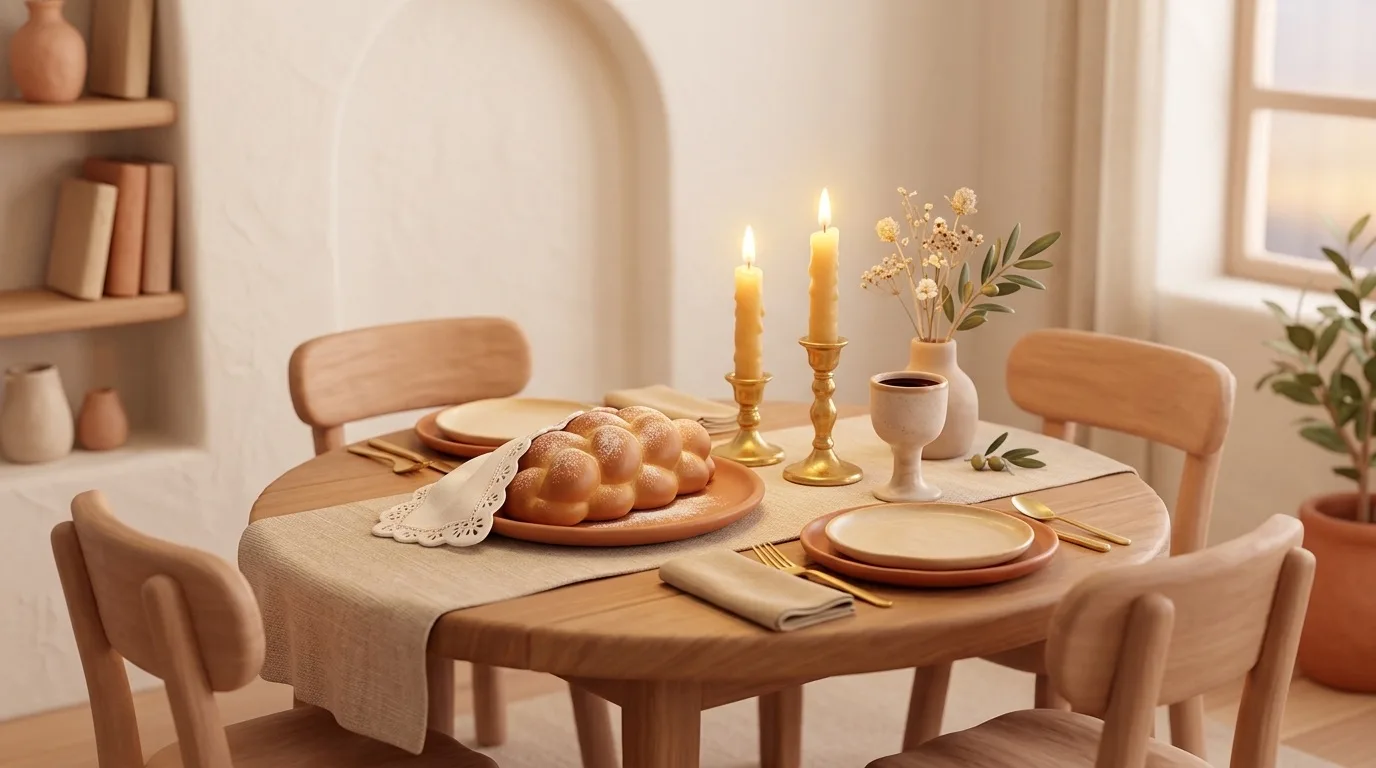
Your First Shabbat: A Warm, Practical Survival Guide
April 29, 2026 · The Derech Ruth team, guided by Rabbi Gadi Elbaz

Nobody forgets their first full Shabbat - from candle lighting to havdalah. It holds real magic, and it also holds moments of "wait, what do we do now?". This guide was written exactly for those moments.
Preparations start on Wednesday
The secret to a calm Shabbat is not cramming everything into Friday. Wednesday–Thursday: shopping and the first rounds of cooking. Friday morning: finish cooking, set up the hot plate, tidy the house. An hour before Shabbat begins: shower, nice clothes, and the phones - onto the charger, silenced, and set aside. Whoever races into Shabbat misses its most beautiful moment: the entrance itself.
25 hours without a screen - really?
This is the part that feels scariest in advance and most surprising in hindsight. The first two hours are strange; your hand keeps reaching for your pocket. And then something lets go. Conversations without interruptions, a book you finally read, real sleep. Most of our conversion candidates say the same thing: the disconnection quickly turned from the biggest obstacle into the biggest gift.
What do you actually do all Shabbat?
Friday night dinner with kiddush and table songs (at your host family's - highly recommended at first), morning prayers at synagogue, the second meal, an afternoon rest (true Shabbat delight!), some learning or a walk, the third meal, and after Shabbat ends - havdalah over wine, spices, and a candle. The day fills itself; the problem with Shabbat is never boredom - it's that it ends too soon.
Classic beginner mistakes
Forgetting to leave a light on in the bathroom (happens to everyone!). Not preparing hot water in a thermos. Accidentally switching off the hot plate on Friday. Arriving at synagogue at seven when prayers start at eight-thirty. They are all mistakes made out of love - you laugh about them at the meal, you learn, and by next Shabbat it's already second nature. One last tip: if something isn't clear in the middle of Shabbat - just ask your hosts. There are no embarrassing questions.
The equipment list for your first Shabbat at home
For those hosting Shabbat at their own place: candlesticks and candles (or tea lights - perfectly kosher), kosher wine or grape juice and a cup, two challahs and a cloth to cover them, a Shabbat hot plate and an urn (or a large thermos), timer-controlled lighting or a decision in advance about which light stays on, a braided havdalah candle and spices (a jar of cloves works beautifully), and a siddur with translation. The total cost - a few hundred shekels, and most of it lasts for years. And what you don't need at first: silverware, fancy tablecloths, and handmade challahs. A beautiful Shabbat is not measured in money.
The Shabbat table dictionary - terms you'll hear
Kiddush - the blessing over wine that sanctifies the day; you stand or sit according to the custom of the house. Netilat yadayim - the ritual hand washing before bread; you pour from the cup, say the blessing, and don't speak until the first bite of challah. Hamotzi - the blessing over the two challahs. Zemirot - the table songs; every home has its own melodies. Dvar Torah - a short thought on the weekly Torah portion. Birkat Hamazon - the grace after meals, found in every siddur. Seudah shlishit - the light third meal of Shabbat afternoon. And havdalah - the short, beautiful ceremony that closes Shabbat: wine, spices, and a candle. After a Shabbat or two, all of these will be yours.
Shabbat alone - possible, but not recommended at first
There will be Shabbatot when you're on your own, and that's okay. But in the first months, do everything you can to host or be hosted: Shabbat is a social, family experience at its core, and alone it's easy to drift ("I'll just check one thing on my phone..."). If you do end up alone: prepare everything in advance as usual, say kiddush out loud even by yourself, take a good book, and go to services and a communal meal if there is one. Above all - tell us in advance. None of our conversion candidates spends Shabbat alone unless they choose to; there is always a family happy to set another place at the table.
FAQ
Genuine emergencies override Shabbat - saving a life takes precedence over everything. As for regular work on-call duties, that is something you work out with your accompanying rabbi; halachic solutions exist for many professions.
This article is general information - not a halachic ruling or legal advice. For personal questions, your accompanying rabbi is the address.
״עמך עמי · ואלהיך אלהי״
Feel like this path is speaking to you?
A first meeting - no commitment, with a lot of heart.
Start the journey →